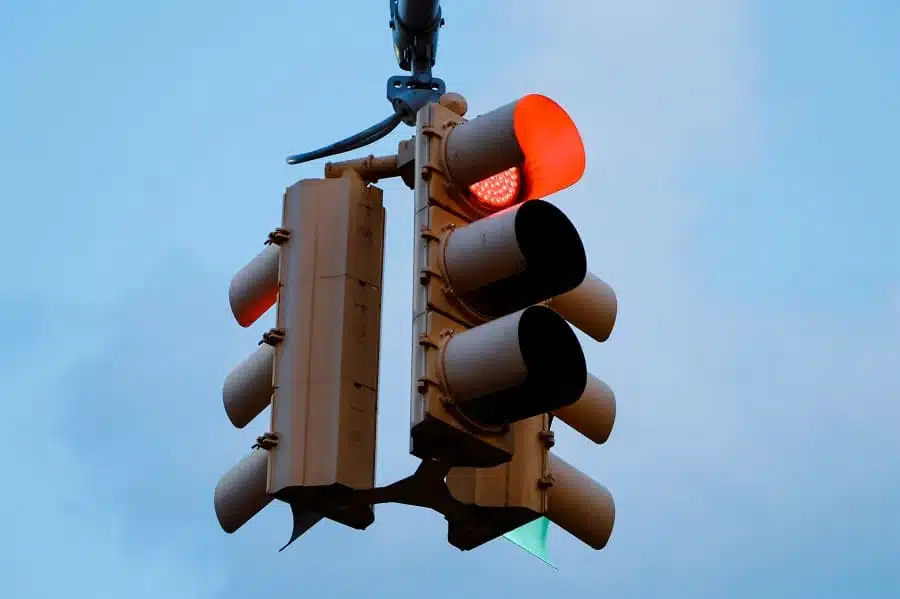
What Is Considered Running a Red Light in Ohio?
In recent years, Ohio’s laws around red lights have seen some changes. These changes can lead to drivers questioning how to navigate a traffic light without violating the law. This article provides authoritative guidance on what constitutes running a red light and clarifies who is considered a red light runner. Below, we will answer some questions regarding red lights and traffic lights in general, helping you understand what actions or behaviors meet the official criteria for running a red light and highlighting important exceptions.
Disclaimer: The following is not legal advice. It is general information meant to inform. Please consult with our Traffic lawyer in Columbus, Ohio for legal advice.
What is considered running a red light in Ohio?
A violation is committed when a driver fails to stop at a red light and proceeds through an intersection while their corresponding light is red. That being said, there are certain circumstances in which running a red light can be considered legal, as per a state law that was implemented in 2017. This law allows drivers to go through red lights if a driver believes that a light is malfunctioning.
This particular state law, allows drivers to go through a red light if:
- The light is not working properly, AND
- The intersection is clear of any oncoming traffic
As defined by Section 4511.132 of the Ohio Revised Code, drivers are required to stop at clearly marked stop lines, stop before entering a crosswalk, or before entering the intersection as a whole. Ordinary care should be exercised by drivers as they move through the intersection. Traffic violations, including running a red light, are infractions that can result in moving violations, fines, and points on a driver’s record. If a driver is already in the intersection when the signal changes to red, they are not considered to have committed a red light running violation. Additionally, a steady red arrow carries the same weight as a solid red light; proceeding in the direction of the arrow while it is red is also a violation. Are Camera Speeding Tickets Legal in Ohio?
Something important to note here: a driver will need to be able to prove that the light was malfunctioning if they drive through the red light.
If you are facing a ticket for running a red light in Central Ohio, consider contacting a Columbus traffic lawyer from The Maher Law Firm for assistance.
What are the most common traffic tickets?
Some of the most common causes of traffic violations include:
- Speeding
- Running traffic lights or stop signs
- Failing to signal for turn or lane change
- Texting while driving
- Driving under the influence
Some more uncommon traffic violations include:
- Wearing headphones while driving
- Operating your vehicle at a slow speed
- Trying to avoid a red light i.e. cutting through gas station
Is it illegal to go through a yellow light in Ohio?
It is not illegal to go through a yellow light in Ohio. A yellow light, as per state law, indicates a warning that the light will soon be turning red. Drivers coming into an intersection on yellow should use their brakes and slow down, and if they fail to clear the intersection before the light turns red, they may be cited for a traffic violation. In most U.S. states, if your vehicle enters the intersection while the light is still yellow, you are legally allowed to continue through it even if it turns red while you are in the intersection. Providing adequate yellow signal time is important and can reduce crashes. Accidents are common when drivers try to ‘make’ the yellow light before it turns red.
To read more about the specifics of yellow light operations, see Section 4511.13.
Can you run a red light if no one is around?
Running a red light is illegal even if there is no other traffic or pedestrians. It can be tempting, especially if it’s late at night, but you can receive a traffic ticket. It is important to follow road rules and signal compliance at all times, regardless of whether anyone else is around, to ensure safety and meet your legal obligations. Additionally, red light violations can lead to increased car insurance premiums depending on the nature of the violation.
Red Light Cameras in Ohio
Red light cameras have become a common sight at intersections across Ohio, serving as a key tool in promoting road safety and reducing the number of red light violations. These cameras are installed at specific locations—often where there is a history of crashes or frequent red light running—to help police officers enforce traffic laws more efficiently.
When a vehicle enters an intersection after the light has turned red, red light cameras are triggered to capture a clear photograph of the vehicle, including its license plate. This image provides crucial information, allowing authorities to identify the vehicle owner and issue a citation. The notice sent to the vehicle owner will include details about the violation, the date and time it occurred, and a copy of the photograph as evidence.
Receiving a citation from a red light camera in Ohio can result in a fine, which varies depending on the circumstances of the violation and the specific location. In addition to the financial penalty, violators may find that points are added to their driving record, which can impact insurance rates and, in some cases, lead to license suspension if too many points accumulate. The process is designed to provide a fair opportunity for the vehicle owner to review the evidence and either pay the fine or contest the citation in court.
The use of red light cameras is governed by Ohio legislation, which sets the terms for how and where cameras can be installed and how violations are processed. This program not only helps to catch red light runners but also allows police officers to focus on other safety priorities, making the roads safer for all drivers and pedestrians.
For those who want to find out more about red light camera locations or review information about the program, resources are available through the Ohio Department of Transportation and local government websites. These platforms provide up-to-date information on camera locations, the process for handling citations, and tips for staying safe and avoiding violations.
Ultimately, red light cameras are intended to deter dangerous driving behaviors and provide a safer way for everyone to share the road. If you receive a notice from a red light camera, it’s important to review the information carefully and understand your options. Staying informed about Ohio’s red light camera legislation and enforcement process can help you avoid violations and keep your driving record clear.
When can you turn left on red in Ohio?
Turning right on a red light when safe to do so is legal unless there is a “No turn on red” sign. What about turning left on a red?
There are limited circumstances in which a driver can legally make a left turn on red in Ohio. Typically, you can make a left on red if you are in the furthest left lane and turning into the furthest left lane of a one-way road.
What causes a traffic light to malfunction?
Traffic light malfunctions can and do occur. Some common causes of traffic light malfunctions include:
- Improperly installed traffic lights
- Severe weather conditions
- Faulty wiring
- Damaged circuits
- Vandalism
Ohio Red Light Law Overview
Ohio’s red light laws are designed to promote safety and reduce accidents at intersections. According to the Ohio Revised Code (ORC) Section 4511.12, a driver commits a red light violation if they enter an intersection after the traffic signal has turned red. This is considered running a red light and is subject to penalties including fines and points on a driver’s license.
What Counts as Running a Red Light in Ohio?
Running a red light in Ohio is defined as entering an intersection after the traffic signal has turned red. However, if a driver is already in the intersection when the light changes to red, such as when waiting to turn left, they are not considered red light runners. The law requires drivers to come to a complete stop at the stop line or before entering the crosswalk or intersection if no stop line is present.
Ohio Red Light Camera Law
Ohio utilizes red light cameras at various intersections to enforce traffic laws. These automated systems capture photographs or video of vehicles that enter intersections during a red signal. The registered owner of the vehicle receives a citation in the mail with the violation details and evidence. These citations are typically treated as civil offenses and do not usually add points to the driver’s license, but fines still apply. There is an appeal process available for those who wish to contest their citation.
What Happens If You Run a Yellow Light and It Turns Red?
In Ohio, a yellow light serves as a warning that the light will soon turn red. It is not illegal to enter an intersection on a yellow light, but drivers must exercise caution and attempt to stop safely. If a driver enters the intersection on yellow but fails to clear it before the light turns red, they may be cited for a red light violation.
Can You Get a Ticket if You Are in the Intersection When the Light Turns Red?
No, if a driver is already in the intersection when the traffic signal changes to red, they are not subject to a red light violation. This typically applies to drivers waiting to complete a left turn or those caught in the intersection when the light changes.
Can You Turn Right on Red in Ohio?
Yes, drivers in Ohio may turn right on a red light after coming to a complete stop, unless a sign explicitly prohibits it. Drivers must yield the right of way to pedestrians and other vehicles before making the turn. A rolling stop or failure to yield can result in a traffic violation.
When Is It Lawful to Make a Left Turn at a Red Traffic Light in Ohio?
Ohio law permits left turns on red only in limited situations: when turning from a one-way street onto another one-way street, provided the driver is in the farthest left lane and turning into the farthest left lane. Drivers must come to a complete stop and yield to all other traffic and pedestrians before proceeding.
Connect with a Traffic Lawyer in Columbus, Ohio
If you are given a ticket for a traffic offense in Columbus, your first step after receiving the ticket should be calling a . Attorney Colin Maher has handled traffic cases since 2009, fighting for clients to help them save their license, avoid points on their record, and reduce fines. Consulting with an experienced traffic ticket attorney can help individuals develop a defense against traffic citations, potentially preventing points on their record and fines. He can be reached for a free consultation and price quote by calling 614-205-2208 or by using our online contact form.
Frequently Asked Questions (FAQs)
Q: What is considered running a red light in Ohio?
A: Entering an intersection after the light has turned red constitutes running a red light. Drivers already in the intersection when the light changes are not considered to have violated the law.
Q: Are red light camera tickets treated as moving violations in Ohio?
A: Typically, red light camera citations are treated as civil offenses rather than moving violations, meaning they usually do not add points to your driving record.
Q: Can I appeal a red light camera ticket?
A: Yes, Ohio provides an appeal process for red light camera citations. Grounds for appeal may include evidence such as a stolen vehicle or missing signage at the intersection.
Q: What happens if I run a yellow light and it turns red?
A: You may be cited if you enter the intersection on yellow but fail to clear it before the light turns red. Drivers should always attempt to stop safely when the light turns yellow.
Q: Can I turn right on red in Ohio?
A: Yes, after coming to a complete stop and ensuring it is safe, you may turn right on red unless a sign prohibits it.
Q: When can I make a left turn at a red light in Ohio?
A: Left turns on red are allowed only when turning from a one-way street onto another one-way street, from the farthest left lane to the farthest left lane, after stopping and yielding.
Q: Can I get a ticket if I am in the intersection when the light turns red?
A: No, drivers already in the intersection when the light changes to red are not subject to red light violations.
Q: What are the penalties for running a red light in Ohio?
A: Penalties include fines and points on your driver’s license, which can also affect insurance rates. Repeat offenses may lead to more severe consequences.
Q: Is it legal to proceed through a malfunctioning red light in Ohio?
A: Yes, if the traffic light is malfunctioning and the intersection is clear, drivers may proceed with caution, but they must be able to prove the malfunction if cited.
Q: How do red light cameras work in Ohio?
A: Cameras are triggered when a vehicle crosses the stop line after the light turns red, capturing images and video used to issue citations to the registered owner.
For more information or legal assistance regarding red light violations in Ohio, consider consulting an experienced traffic lawyer.
RECENT POSTS
-
What Is the Legal Limit for Alcohol in Ohio?
23 Apr 2026
-
Understand Drug Paraphernalia Charges in Ohio
06 Mar 2026
-
How To Dismiss a Traffic Ticket in Columbus, Ohio
04 Feb 2026
-
Reckless Driving vs. Speeding Tickets Ohio
05 Jan 2026
-
What To Do After a Hit and Run in Columbus, Ohio
22 Sep 2025
-
What Happens If You Hurt Someone in a DUI?
27 May 2025
BLOG CATEGORIES
-
News
18 Posts
-
Criminal Defense
45 Posts
-
Traffic
129 Posts
-
Weapons
3 Posts
-
Drugs
23 Posts
-
DUI
197 Posts
-
Current Events
1 Posts
-
Expungements
2 Posts